How To Use This Project
Somatic & Military History
This project is a work of somatic history, meaning the how the senses, such as sights, sounds, smells, taste, touch, are understood and given meaning within a historical context. The historical context for this project is the Marine Corps (USMC) marines' individual and collective experiences in Nicaragua during the late 1920s.
Source Material
In early 1928 President Calvin Coolidge ramped up US military presence, largely Marines, in Nicaragua to help keep peace for their Presidential Election in November the same year. In the US military's eyes the primary adversary was the rebel leader Augusto César Sandino who had been using guerilla warfare against the Conservative led Nicaraguan government.
One of the over 1,000 marines deploying into Nicaragua was a newly promoted USMC First Lieutenant: Harold Cyrus Roberts. Roberts was no stranger to military life. He had served as an enlisted man in the Navy during World War I serving in France. After the War he commissioned in the USMC.
In January 1928, Lt. Roberts landed ashore Nicaragua at Corinto before traveling by railroad to the capital in Leon. From there he received orders to report to the so-called "Northern Area" of Nicaragua. The Northern Area was a wedge-shaped military operational region buffeted by mountains and sharp river gorges, accessible best by bull ox cart or horse. Known locally as 'Nueva Segovia,' Sandino's rebels were particularly active there, using the jungle mountains as a fog of war and the Honduran border as an escape hatch to evade Marines and local police forces.
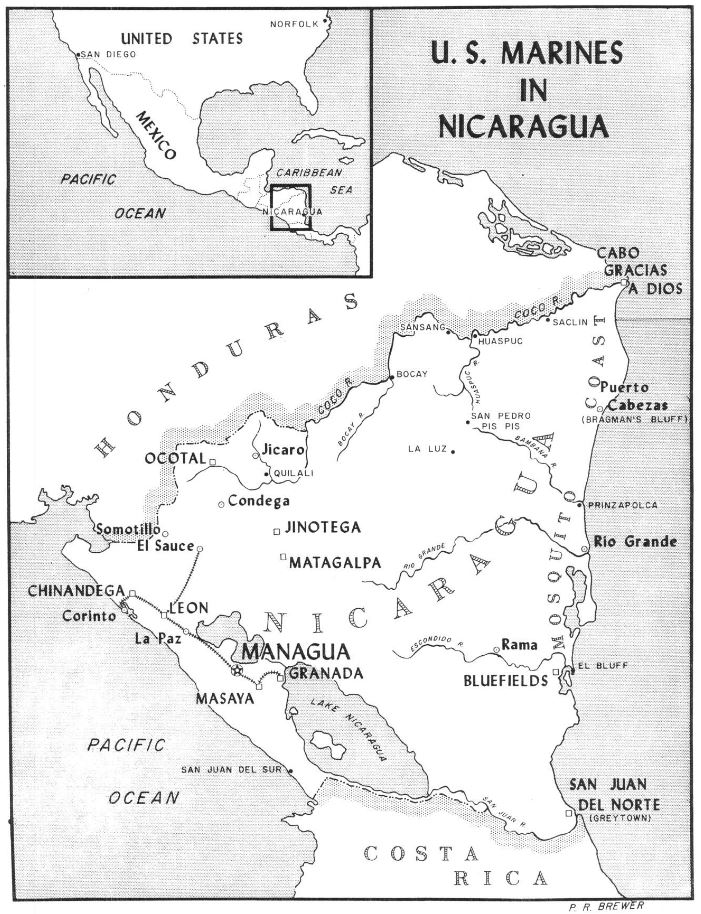
Fig 1. "U. S. Marines in Nicaragua", P. R. Brewer, USMCU History Division, Archives Branch, 1958.
Whilst assigned to the 11th Regiment in the Northern Area Lt. Roberts maintained a near bi-weekly letter writing habit to his wife, Faith Newton Roberts.[1]
Roberts' letters detailed numerous Marine Corps patrols throughout the mountains of Northern Nicaragua to combat Augusto Sandino and his rebels. The patrols triangulate within the mountain trails and farmland between Ocotal, Pueblo Nuevo, and Condega. Roberts describes the living conditions of the Marine Corps in Northern Nicaragua to include the social aspects of camp and his time at the Marine Corps Regimental Headquarters in Ocotal. Further he describes the countryside landscape, animals, plants, insects, terrain, and plans of attack in detail.
Particular to this collection is Robert's coverage of the “Coco River” Expedition, which set out in September 1928 from Northern Central Nicaragua in order to clear the river to the East coast. Having ventured into the jungle terrain, Roberts’ letters contain details of the types of diseases and other complications the Marines encountered on the river to include the eventual recall of the Marines before the mission was completed. Roberts and his fellow officer, Captain Pete Geyer received Navy Crosses for their bravery and leadership Coco River Expedition.
In addition to the letters Lt. Roberts also took photographs documenting the terrain, cities, native population, and Marines stationed at the Coco River, Pueblo Nuevo, and Condega.
The archival collection of Harold C. Roberts provides a window into a Marines world during the late 1920 campaign in Nicaragua. Roberts captures his particular experiences in written and photographic evidence. This project weaves together his experiences and interpretations and attempts to highlight and expand on their meaning within their historic somatic context.
Collections and Items
These letters and the photographs are included here in the "Items" section as individual artifacts and are also thematically arranged under the "Collections" tab. Collections include primary sources from newspapers, magazines, autobiographies, intelligence reports, and other collections in the Marine Corps History Division archives. Please also see The Marine Corps History Division Archives Flikr.
Exhibit
The Lt. Harold C. Roberts Exhibit brings together the Items and Collections to present a somatic historical narrative of his time on the Coco River.
[1] The Harold C. Roberts Collection (COLL/2678) resides at the United States Marine Corps University, History Division, Archives Branch at Quantico, Virginia.