Coco River Expedition Planning August 1928
"Col. Dunlap has a new idea. He wants to send an expedition down the Coco River from Ocotal to the east coast around 400 miles by boat...It will be a really great adventure."[1]
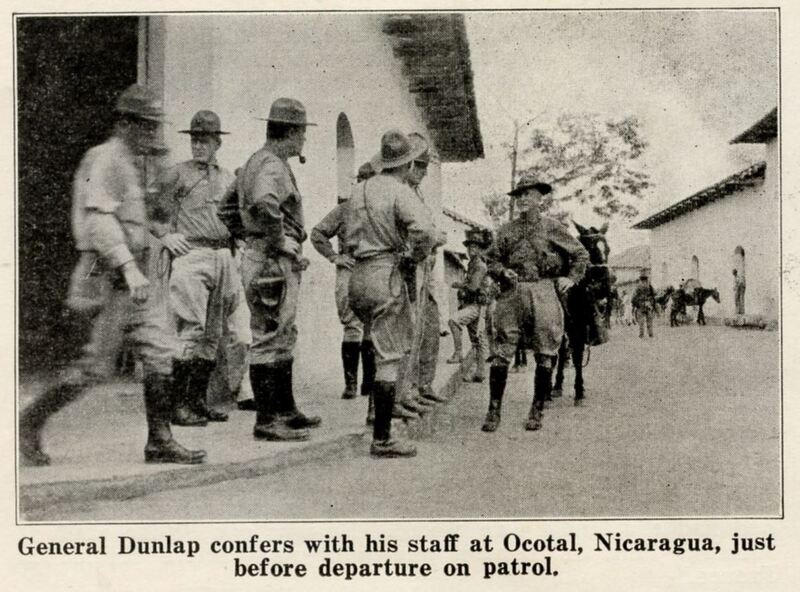
Colonel Robert H. Dunlap, the commander of the 11th Regiment, oversaw the Northern Area during Lt. Roberts deployment in Nicaragua. He had telegraphed Roberts to congratulate him on his successful patrols on horseback. He now had Roberts in mind for his new project down the Coco River. His idea to send a river patrol down the Coco River may or may not have been influenced by a similar operation, already underway, happening on the Eastern Operational Area.
At the time of Roberts' letter to his wife of Col Dunlap's idea Captain Merritt Edson and his Marines had already been battling the tides, rain, and rebels for weeks on the Coco River. Their orders to were "proceed up the Coco River, to drive the bandits from the river valley, destroying such groups as it might encounter, to take and hold Poteca, and to continue the movement southwest from the Northern Area in the Vicinity of Santa Cruz."[2] Rather than starting from Ocotal and moving East, Edson's "Rio Coco Patrol" had began on the East coast at Puerto Cabezas and by mid-August had made it to the central city of Poteca.
Edson's patrol of the Coco River was as successful as it was hard-earned. On August 17, 1928 Edson and his Marines arrived in Poteca. Edson tallied Sandino's losses: "fourteen killed, four wounded (escaped), five taken prisoners; and having captured a total of 54 arms." The Marines inflicted these rebel casualties under conditions of "difficulty, danger, isolation from friendly ground troops."[3] The accomplishment of Edson's Coco River patrol earned him a Navy Cross and, in posterity, provided an example of sucessful river operations for future Marines to study.
Lt. Roberts' Coco River Expedition would prove to be an entirely different sort of operation.
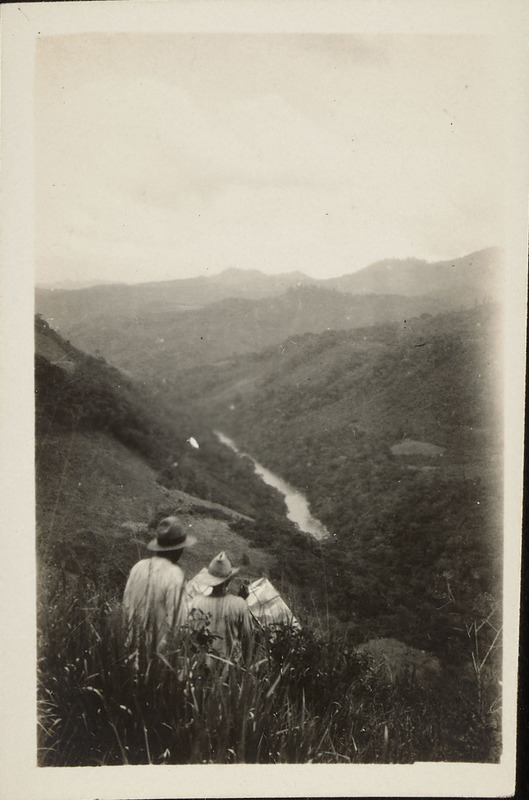
For starters, the terrain in Ocotal was mountainous and thick with jungle. While Edson had fought against the current the new Coco River Expedition proposed by Col Dunlap would have to overcome rapids and falls created by the rocks from the nearby cliffs. Additionally, the rainy season weather created dangerous and unpredictable flooding made worse by the run off of the hills. Not to mention the perenial threat of bandits. The logistics of the Expedition did not deter Roberts, in fact he had been thinking on exactly how to overcome these difficulties.
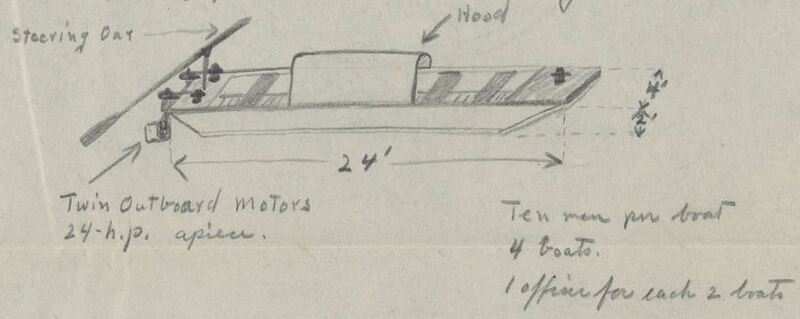
The expedition Marines "are to go down the river with the current in flat bottom boats 28ft x 4ft each with two outboard motors and carrying 12 to 20 men each. The supplies and food to be dropped from planes daily suspended from parachutes."[4] The flattened bottoms would help to not catch on any rocks or drag on the riverbed when the water was low. When the construction by Navy carpenters was underway Roberts took their suggestion to reduction the size of the length to 20ft, for easier carrying in case they needed to go over land.
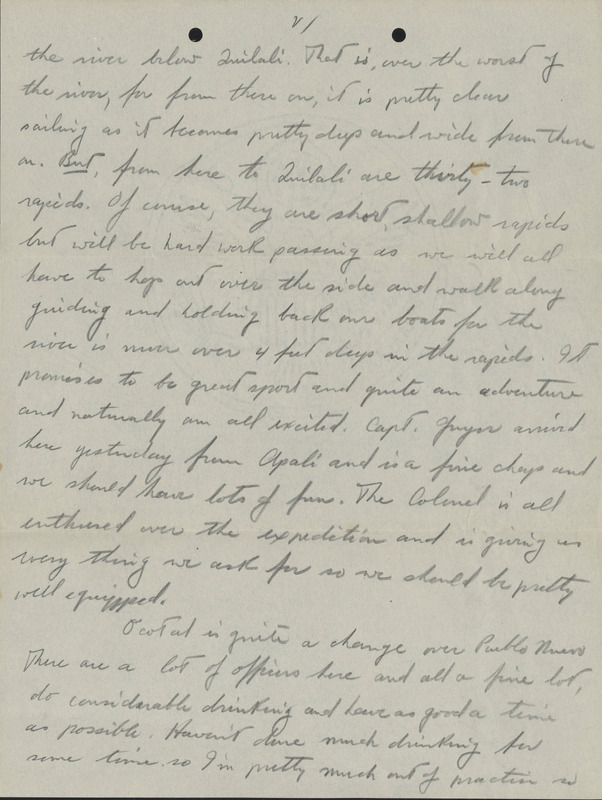
In mid-August Roberts went on a reconnaissance flight in a biplane to view the river from above. He noted that from the proposed start point "to Quilali are thirty-two rapids. Of course, they are short, shallow rapids but will be hard work passing as we will have to hop out over the side and walk along guiding and holding back our boats for the river is never over four feet deep in the rapids. It all promises to be great sport and quite and adventure."[5]
In case they met any bandits Roberts assured his wife his boats would be ready. They were not ordinary small boats, but looked more like "battleships," telling her the "armament we are carrying per boat with a heavy browing machine gun mounted in the bow and two browning automatic rifles, to [sic] Thompson machine guns, a rifle grenadier, a hand grenadier and five riflemen. We can defeat Sandino's entire outfit if we can just hit him."[5] The anxiety of an elusive enemy lurks in Roberts' letters during this period. He had been patrolling for months, often hundreds of miles at a time and his experiences against the bandits had dwindled. Perhaps the Coco River Expedition was what would help assauge the disappointment at ever-dispersing bandits.
"I left Ocotal all excited over the idea. It may go through I don't know but if it does, we will be the first white men to travel the full length of the Coco R. in boats and nearly the entire way through virginized unexplored country."[4]
Roberts took to planning the operation with an seriousness that he hoped his superiors would recognize and reward him with command of the expedition. The meaning of what the Coco River Expedition offered to Roberts was tied to ideas of adventure, conquest, manhood, and a touch of romanticism.
In Late August Roberts received good news: he and Captain Pete Geyer would lead the Coco River Expedition to start at the beginning of September.
Sources:


[1] Correspondence from Harold C. Roberts to Faith N. Roberts 9 August, 1928, Folder 21, COLL 2678, Archives Branch, Marine Corps History Division, Quantico, VA, 1.
[2] Field Order No. 4, Eastern Area, Puerto Cabezas, Nic.
[3] Merritt A. Edson, "The Coco River Patrol," Marine Corps Gazette, August., Nov. 1936, 63.
[4] Correspondence from Harold C. Roberts to Faith N. Roberts 9 August, 1928, Folder 21, COLL 2678, Archives Branch, Marine Corps History Division, Quantico, VA, 1.
[5] Correspondence from Harold C. Roberts to Faith N. Roberts 14 August, 1928, Folder 23, COLL 2678, Archives Branch, Marine Corps History Division, Quantico, VA, 2.